
About This Portfolio
This portfolio represents my work in the Media Literacy minor. Across these courses, I studied how media shapes perception, culture, communication, and public understanding. The portfolio includes essays, websites, music analysis, visual design work, and applied media projects.
PSYC 11000 — Media Literacy and the Psychology of Inquiry
This course explored how media influences emotion, perception, and decision-making. For the final project, my group created a PSA campaign focused on irresponsible holiday pet adoption.
Featured Project — SPCA Holiday PSA

After researching animal shelters, we found that many pets adopted as holiday gifts are later returned because recipients are unprepared for the responsibility. Our campaign encouraged responsible adoption while promoting donating to shelters as an alternative way to help animals.
We focused on visual storytelling rather than large amounts of text, using matching puppy images to create an emotional before-and-after comparison. I created the visual layout, image composition, and logo placement for the project.

This project taught me how visual media, color, imagery, and layout can shape emotional responses and communicate messages quickly and effectively.
LNGS 11100 — Global Screen Cultures
This course explored film and screen media across cultures through close analysis of cinematography, symbolism, and storytelling.
Featured Project — Parasite Presentation

For this project, I collaborated on a presentation analyzing Parasite (2019), directed by Bong Joon-Ho. The presentation explored themes of class inequality, social mobility, and symbolism throughout the film.
My section focused on frame and scene analysis, specifically how lighting, camera movement, composition, and physical space were used to visually reinforce the divide between social classes in the film.
This project strengthened my ability to critically analyze visual media and understand how filmmaking techniques communicate meaning beyond dialogue alone.
ARTH 25600 — History of Graphic Design
This course explored the historical development of graphic design and how visual styles reflect cultural movements and social values.
Featured Project — The Yellow Book Analysis

For this project, I researched and presented on The Yellow Book, an influential Victorian-era literary and artistic publication associated with the Aesthetic Movement and early modernist thought.
My analysis focused on composition, color, linework, symbolism, and the cultural significance of Aubrey Beardsley’s cover designs. I examined how the publication challenged Victorian social norms through stylized imagery and the idea of “art for art’s sake.”
This project strengthened my understanding of visual communication and how graphic design can reflect larger artistic and cultural movements.
MUNM 25600 — Women in Popular Music
This course explored music as a form of cultural expression, identity, and social commentary, with a focus on the contributions and influence of women in popular music.
Featured Essay — “We Are Simply, All, The Birds”

For this essay, I analyzed “Feed the Birds” from Mary Poppins as a protest song rooted in empathy, spirituality, and care for marginalized people. I connected the song’s themes to discussions of protest music and emotional resistance, particularly the role of spiritual music in social movements.
Rather than focusing on loud or confrontational protest, I explored how gentleness, compassion, and emotional vulnerability can also act as forms of resistance and social awareness.
“We are simply, all, the birds.”
Read Full Essay
We Are Simply, All, The Birds
The song that immediately came to mind for me as a protest song isn’t one I think is generally seen as one. The song, “Feed the Birds” from Mary Poppins, sang by one of the most incredible, beautiful, talented women in the world, Julie Andrews. At the surface level, “Feed the Birds” is a song about an old beggar woman who sits on the steps of St. Paul’s Cathedral in London who feeds the birds and sells bags of birdseed so others will as well. Mary Poppins is a children’s movie, so I watched it for the first time as a child. I always liked the “bird song.” About a year ago, one of the people who wrote the song passed away and I saw it on my Instagram feed. I remembered liking the “bird song” so I decided to listen to it again. I was genuinely surprised about how it was making me feel as I was listening to it. Maybe it’s just because I’m older now and actually understand what a metaphor is. Very quickly, I realized that the birds in question were not just actual birds, they were the poor, the oppressed, the unwanted, the foreigners, and all the people in the world experiencing hardship or injustice. I also understood that feeding them, while sometimes it could be literal, was more than that. It’s giving space to people in those situations, temporary or systemic, to be authentic, feel safe, be sheltered, and be cared for by those of us who have the means to care for them. That kind of tenderness is its own protest in a world that experiences such concentrated and widespread hatred, hardship, and injustice.
The tenderness doesn’t just end with the meaning of the words of the song. The song itself isn’t loud, angry, or, dare I say, supercalifragilisticexpialidocious. It’s slow, and sweet, it’s a lullaby, quite literally. Mary sings the song to the Banks children in their nursery to send them to sleep. Additionally, the song exists in the Anglican context of the Banks household, there are times where the song is deeply hymnal. In its words it draws direct images of the saint’s statues on St. Paul’s Cathedral smiling on the bird woman (portrayed by Jane Darwell), as well as anyone who takes up her call to feed the birds. In the music itself, Julie Andrews is accompanied by a choir who contributes very beautiful soprano and baritone hymnal background. In other words, the song itself is telling the listener that feeding the birds is calling for every individual on a spiritual level. You’re supposed to feel it in your soul and in your most vulnerable moments.
That quiet spirituality connects “Feed the Birds” to the kind of protest that Tammy Kernodle describes in Will Robin’s interview about the 1963 March on Washington. Kernodle explains how Black women musicians like Mahalia Jackson, Odetta, and Camilla Williams used spirituals to protest in a way that was “radical, but deeply emotional.” These women were often denied the microphone as political speakers, yet their songs carried messages of freedom, grief, and persistence that transcended words. Their performances feel like a spiritual experience for both the woman performing it and the people listening to it. It also reminds us that protest doesn’t always have to be loud or confrontational, it can also be rooted in care, and community, while not allowing the issue to slip under the rug. Which unfortunately, some lonely and incredibly sad, angry people take as confrontational.
In that same sense, “Feed the Birds” represents protest through gentleness. It invites empathy and moral awakening through beauty instead of anger. But it also doesn't let you hide from the issues at hand. The Bird Woman’s plea, “Feed the birds, tuppence a bag,” is simple, but it challenges listeners to see humanity in those society overlooks. Like Mahalia Jackson urging Dr. King to “tell them about the dream,” the song becomes a call to act out of love and conscience, and to leave hatred and bias behind. We are simply, all, the birds.
This project strengthened my ability to connect music, culture, emotion, and historical context through close media analysis.
COMP 10500 — Introduction to Website Development
This course introduced the foundations of web design through HTML, CSS, accessibility, layout design, and responsive styling.
Featured Project — This Portfolio Website
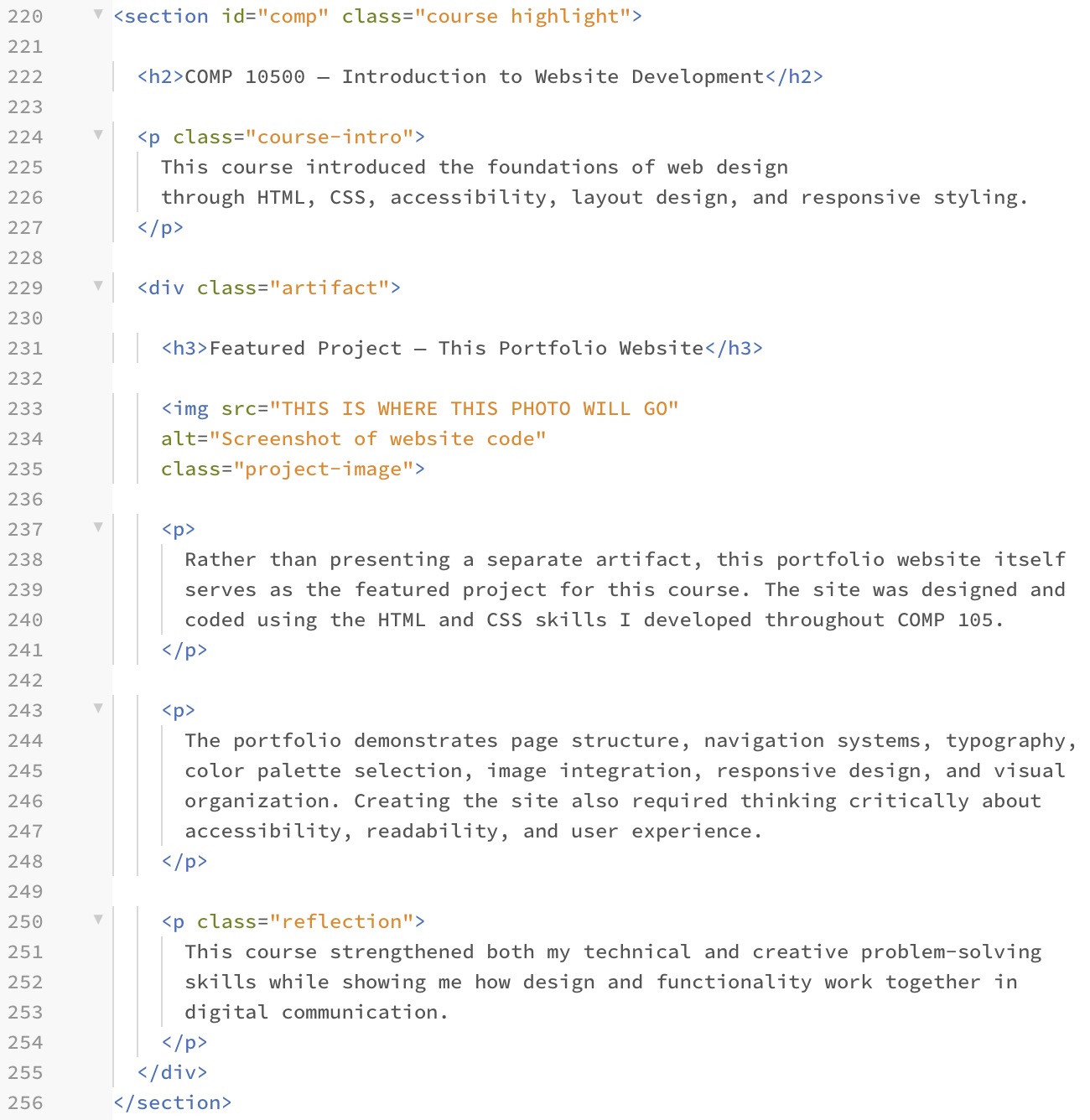
Rather than presenting a separate artifact, this portfolio website itself serves as the featured project for this course. The site was designed and coded using the HTML and CSS skills I developed throughout COMP 105.
The portfolio demonstrates page structure, navigation systems, typography, color palette selection, image integration, responsive design, and visual organization. Creating the site also required thinking critically about accessibility, readability, and user experience.
This course strengthened both my technical and creative problem-solving skills while showing me how design and functionality work together in digital communication.
MGMT 29800 — Promoting and Managing ITHACON
This course centered around the planning, promotion, and management of ITHACON, Ithaca College’s annual pop culture convention.
Featured Project — ITHACON 2024
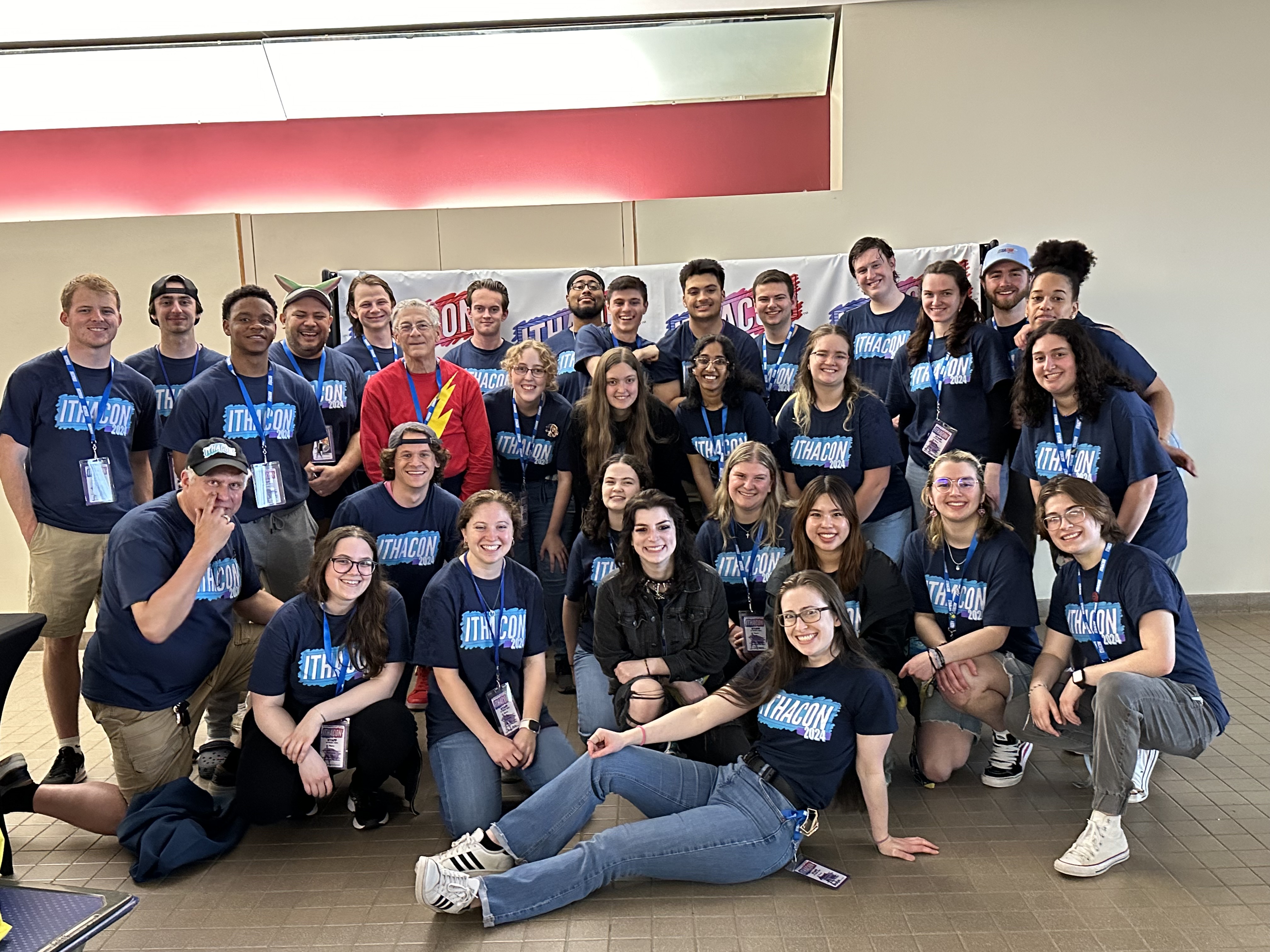
Throughout the semester, the class worked collaboratively to organize and prepare for ITHACON 2024 through areas such as guest relations, event planning, promotion, and convention management. :contentReference[oaicite:0]{index=0}
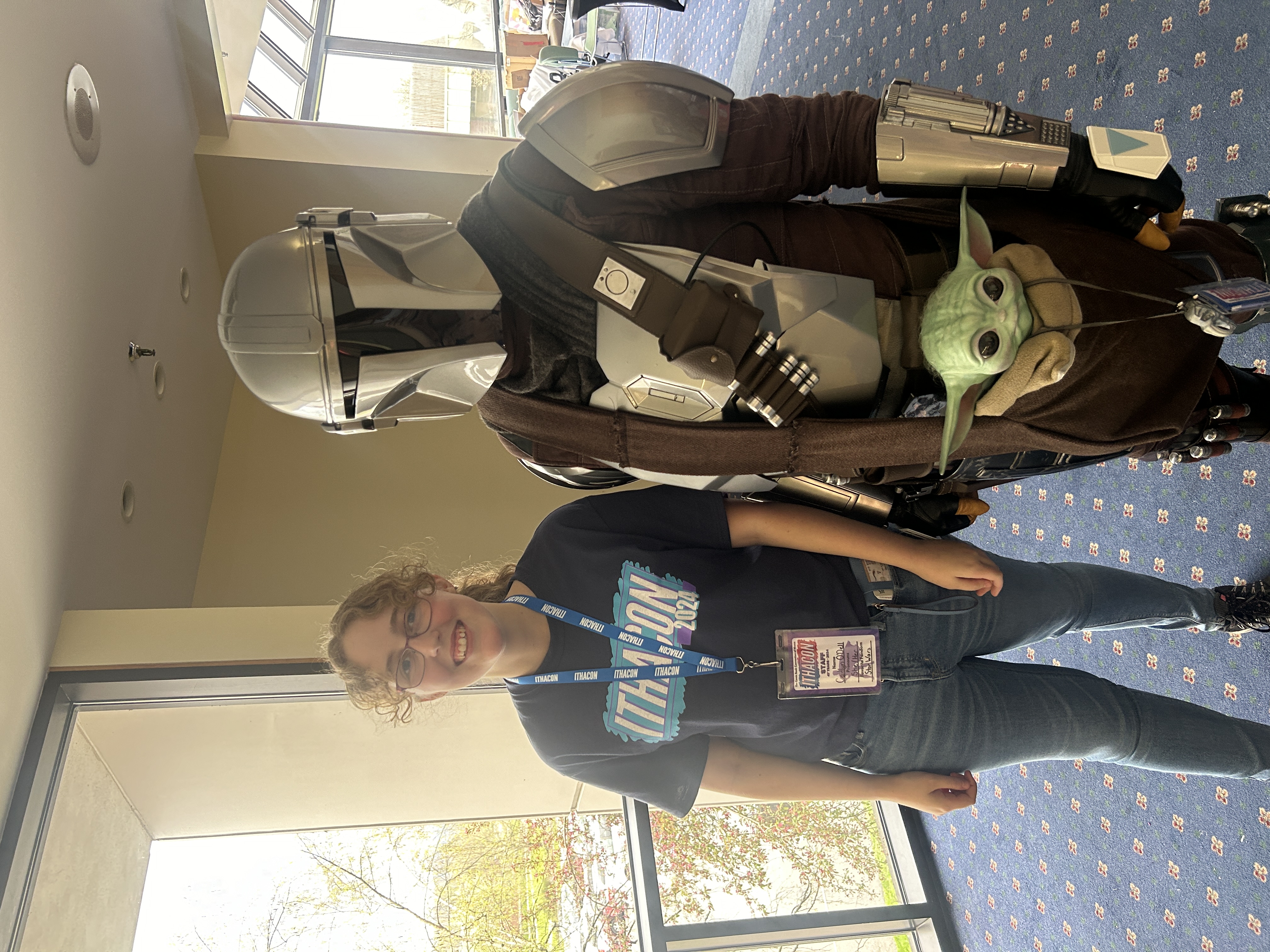
I served as a Guest Coordinator, helping maintain communication with convention guests, coordinate scheduling, and assist with guest relations throughout the planning process. :contentReference[oaicite:1]{index=1}
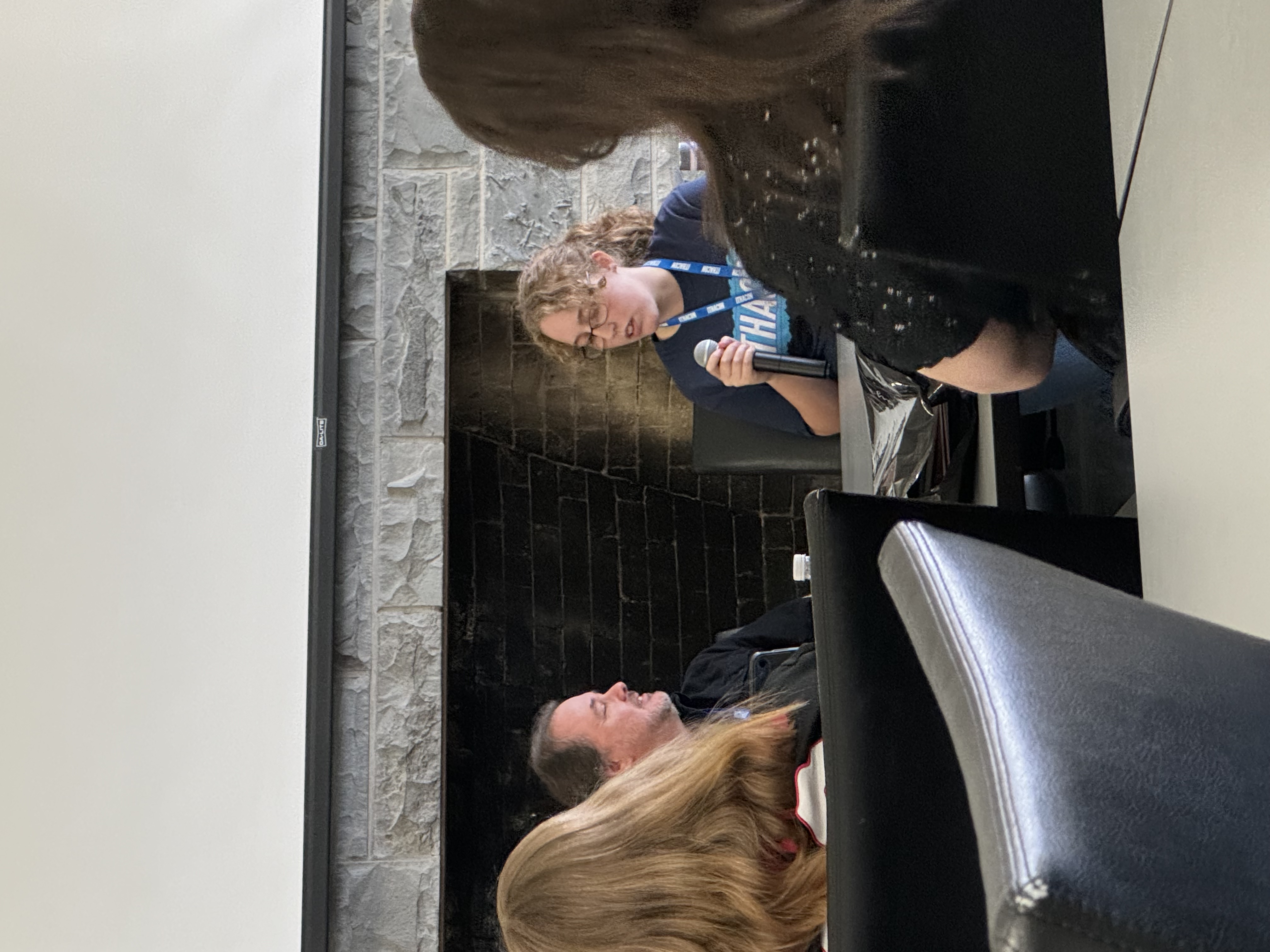
During the convention, I also hosted a panel with Nicholas Parisi, a local Rod Serling historian and expert, where we discussed Serling’s career and influence on television and popular culture.
This experience gave me hands-on experience in event organization, professional communication, public speaking, and audience engagement within a large collaborative convention setting. There's really nothing like it.
Final Reflection
Through the Media Literacy minor, I developed a stronger understanding of how media shapes the way people communicate, interpret information, and connect with the world around them. Across psychology, film, music, graphic design, website development, and event management, I learned that media literacy is not only about analyzing messages, but also about creating meaningful and intentional forms of communication.
Many of the projects included in this portfolio focused on visual storytelling, emotional communication, and audience engagement. Whether designing a PSA, analyzing symbolism in film, studying historical graphic design, writing about music as protest, building this website, or helping organize ITHACON, I became more aware of how design choices, imagery, structure, and tone influence the way people experience media.
Creating this portfolio also allowed me to reflect on how interconnected these courses were despite covering very different subjects. Together, they strengthened my skills in critical thinking, creativity, collaboration, organization, and communication across multiple forms of media.
As I move forward into veterinary medicine, I know these skills will continue to matter. Clear communication, visual literacy, empathy, and public engagement are essential in science and healthcare, especially when helping people understand complex or emotional topics. This minor helped me become not only a stronger creator and analyst of media, but also a more thoughtful communicator overall.